The Peoples’ Mouthpiece Initiative (TPM) has launched Liberty on Air, a new radio series dedicated to translating Nigerian law into language the ordinary citizen can understand and use.
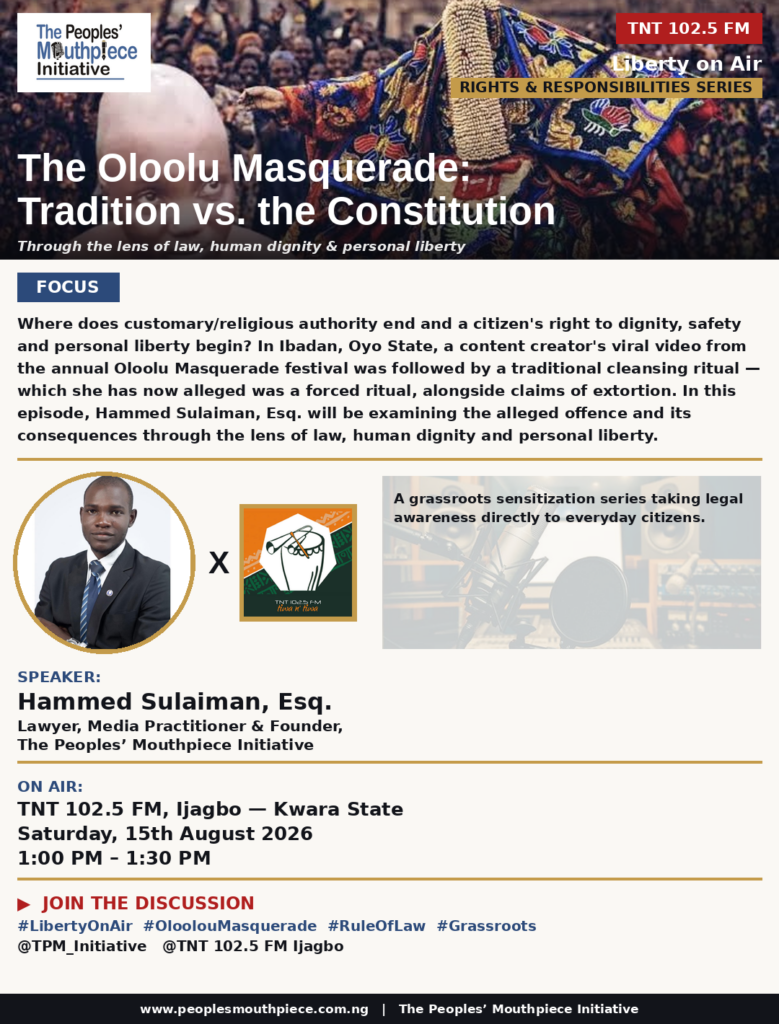
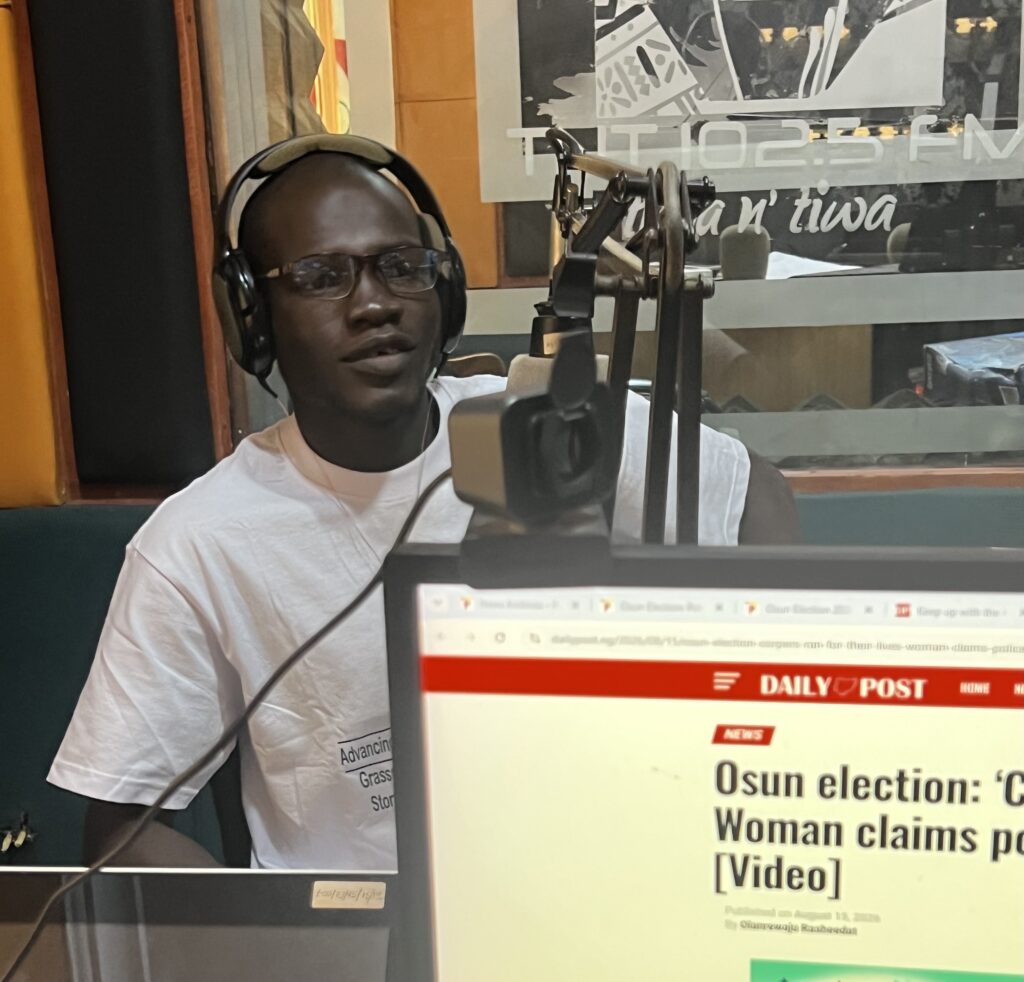
The maiden edition aired Saturday on TNT 102.5FM Ijagbo, Kwara state, with TPM’s Founder and Executive Director, Hammed Sulaiman, Esq., hosting a wide-ranging discussion on the Oloolu Masquerade controversy in Ibadan and the constitutional questions it has reignited around custom, consent, and human dignity.
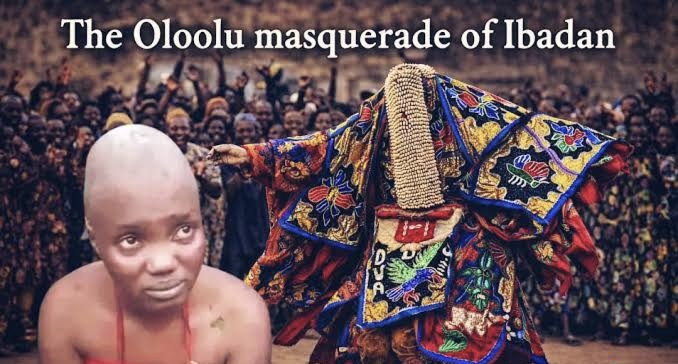
The episode examined the case of a young content creator whose viral video after this year’s Oloolu festival led to a disputed “traditional cleansing” ritual, with the creator later alleging she was coerced and asked to pay as much as ₦400,000. Rather than adjudicate the competing accounts, Sulaiman used the controversy as a launchpad to walk listeners through the legal framework governing the clash between customary practice and constitutional rights.
“No custom, no matter how old, no matter how sacred, is bigger than a human being’s dignity,” Sulaiman told listeners, framing the central thesis of the debut episode.
Background
The Oloolu Masquerade festival is an annual tradition among the Oyo people of Ibadan, marked by masquerade displays, drumming, and dancing, and regarded as one of the oldest and most respected customs in the region. This year’s edition drew wider attention after a young content creator, who had attended and filmed parts of the festival, was made to undergo what has been described as a “traditional cleansing” ritual.
Accounts of what happened next diverge: some reports describe the process as consensual and consistent with established custom, while the content creator has since publicly alleged that the ritual was forced on her and that she was asked to pay roughly ₦400,000 as part of it. No formal investigation or complaint had been confirmed at the time of the broadcast, and TPM has not taken a position on the disputed facts.
He grounded the discussion in specific constitutional provisions, explaining that while customary law is recognised as legitimate under Nigerian jurisprudence, it has always been subject to the repugnancy test — the long-standing principle that a custom offending natural justice, equity, and good conscience will not be enforced by the courts.
He pointed listeners to Section 34 of the 1999 Constitution, which guarantees every person’s right to dignity and freedom from torture or degrading treatment, and noted that this right, unlike freedoms of religion or movement, cannot be limited for any reason — not tradition, not public order, not custom.
“You cannot suspend a person’s dignity for the sake of tradition, for the sake of religion, for the sake of anything,” Sulaiman said, addressing the boundary between constitutionally protected culture and conduct that crosses into criminality.
Sulaiman situated the Oloolu matter within a broader pattern that he traced through other Nigerian customs — including Oro festival curfews, widowhood rites, the Osu caste system, female genital mutilation, and the historical practice of twin-killing — as evidence that Nigerian culture has repeatedly evolved toward greater respect for individual dignity without losing its identity.
Sulaiman closed the episode with a practical three-question test for listeners to apply to any custom or ritual — whether there was consent, whether there was force, and whether there was extortion — and outlined steps citizens can take if they find themselves coerced during a traditional or religious practice, including contacting the Police, documenting the incident, and reaching out to the National Human Rights Commission or organisations such as TPM.
For The Peoples’ Mouthpiece Initiative, the episode reflects the organisation’s founding conviction: that legal literacy is not a privilege reserved for the educated elite, but a right owed to every Nigerian, delivered in the language of the street, the market, and the living room. Liberty on Air will continue as a recurring series, with future editions addressing other rights and realities shaping everyday Nigerian life.
About The Peoples’ Mouthpiece Initiative
The Peoples’ Mouthpiece Initiative (TPM) is a Nigerian civic media and advocacy initiative working at the intersection of legal literacy, media, and policy advocacy.